
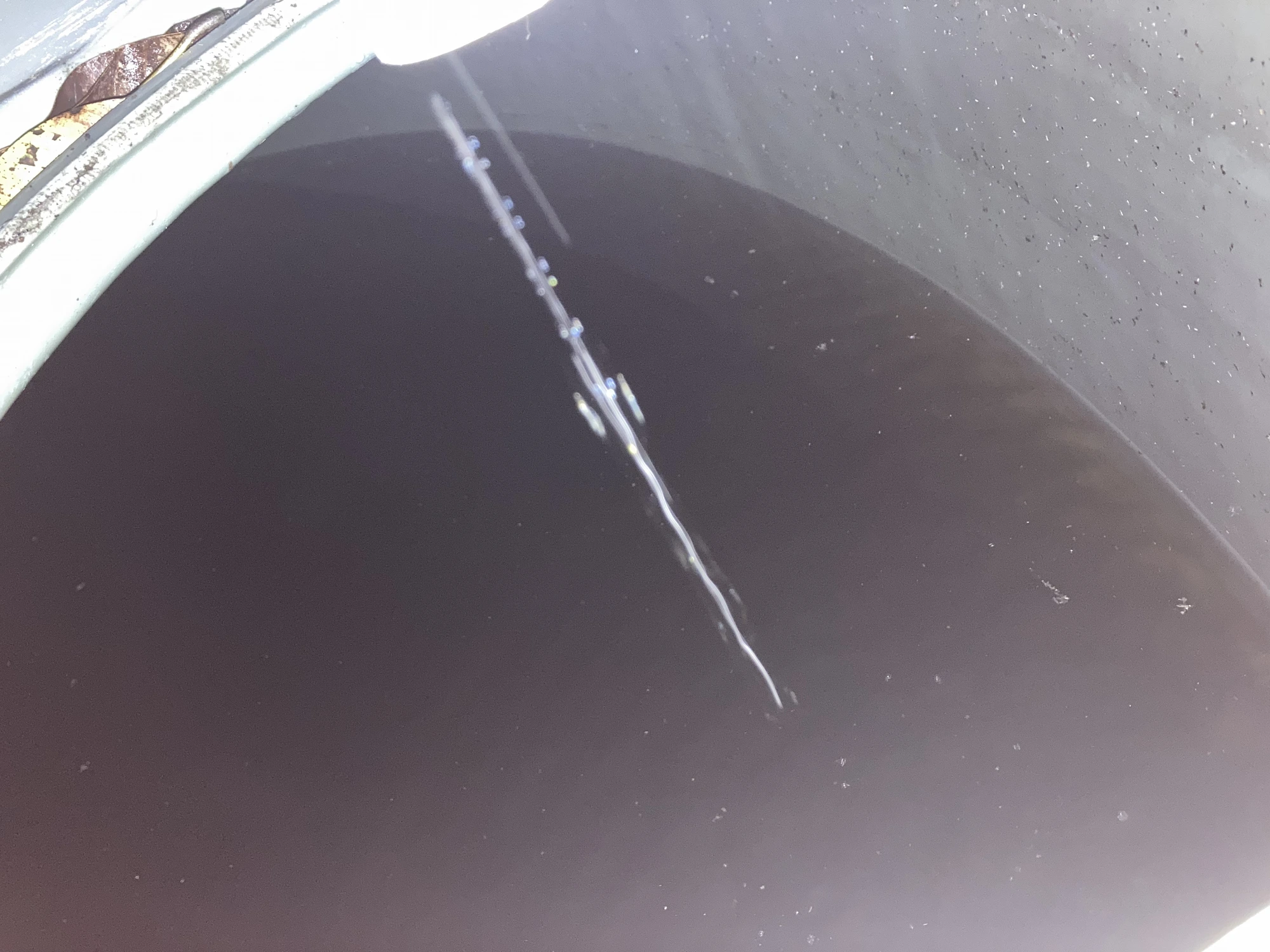
Tank “sludge” is usually a mixture of fine roof dust, decomposed organic matter, pollen, insect material and other particles that have entered with rainwater and settled. Its presence is common, but the amount, condition and effect on the system matter.
How does it get there?
Rain washes material from the roof into the collection system. Well-maintained gutters, leaf diverters, first-flush devices and inlet screens reduce contamination, yet very fine particles can still pass through. Gravity carries heavier material to the floor of the tank.
Sediment can remain below the normal outlet for some time. It may be disturbed by low water levels, inflow turbulence, pump suction, maintenance work or severe weather.
Is all sediment dangerous?
Appearance alone cannot determine microbiological or chemical quality. A thin sediment layer is not automatically evidence that someone will become ill, and a spotless-looking tank does not guarantee suitable drinking water. Risk depends on the catchment, system integrity, treatment and intended use.
Australian public-health guidance emphasises preventive maintenance for rainwater systems. Where there is uncertainty — particularly for drinking water — inspection and appropriately selected testing provide better evidence than appearance alone.
Why simply stirring it up is unhelpful
An improvised clean can suspend settled material throughout the stored water and send it toward pumps and filters. Entry into confined tanks also presents serious safety risks. Professional extraction is designed to remove accumulated bottom material while controlling disturbance and working within the tank's access constraints.
Reduce future accumulation
- Keep roofs and gutters appropriately maintained
- Remove overhanging debris sources where practical
- Maintain first-flush devices
- Keep inlet and overflow screens intact
- Check that tank openings are sealed against pests
- Service filtration and UV equipment to schedule
- Investigate rapid filter blockage rather than repeatedly replacing cartridges
Frequently asked questions
- Can sediment make filters block faster?
- Yes. A high particulate load can shorten sediment-cartridge life, although other causes such as pipe scale or catchment debris may contribute.
- Can I judge sediment depth from tap water?
- Not reliably. The outlet may sit above the bottom layer, so an internal assessment can reveal conditions that are not obvious at the tap.
- Does tank cleaning replace filtration or UV?
- No. Cleaning, filtration and disinfection perform different functions. A robust system uses the measures appropriate to the source and household needs.